Every first-time traveler to Egypt eventually asks us the same question: Cairo or Luxor first? It’s not a bad problem to have; both cities will leave you a little speechless, but they hand you completely different opening chapters to the same story. If your schedule forces you to pick, here’s how we’d actually think it through, based on what we’ve seen work (and not work) for our own clients.
The Short Version
Got five days or more? Do both; they’re built to be seen together, and most of our clients regret it a little when they skip one. Stuck at three or four days? Go with Cairo if you want the icons out of the way first (the Pyramids, the new Grand Egyptian Museum), or start with Luxor if what you’re really after is ancient history without the big-city noise around it.
If you’re still undecided by the end of this guide, here’s the honest rule of thumb: Cairo rewards travelers who want to see the “greatest hits” fast. Luxor rewards travelers who want to slow down and actually feel Egypt’s history rather than just check it off a list.
A Quick Bit of Context
It helps to understand what these two cities actually are before comparing them. Cairo is Egypt’s modern capital, home to over 20 million people in its greater metro area, and it’s where almost every international flight into Egypt lands. Luxor, on the other hand, sits about 500 km south along the Nile and was once ancient Thebes, the capital of Egypt during its most powerful era, the New Kingdom. That’s why Luxor’s monuments skew so heavily toward temples and royal tombs, while Cairo’s draw is more the Pyramids era and modern city life layered on top of it.
Cairo First: If You Want the Icons
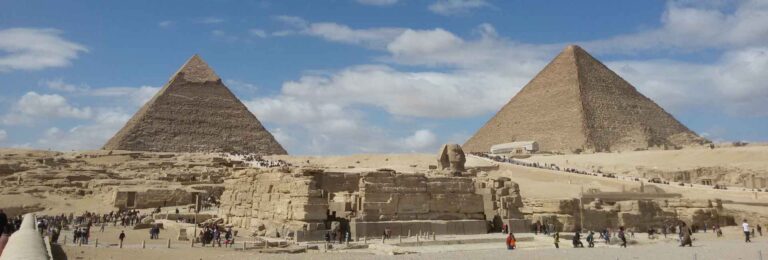
Cairo doesn’t ease you in. It’s loud, it’s sprawling, and somehow the Great Pyramid of Giza still shows up at the edge of the city almost without warning. You can stand next to a 4,500-year-old monument in the morning, walk through the newly opened Grand Egyptian Museum by afternoon, and be haggling over spices in Khan el-Khalili by evening.
What you’ll actually see and do in Cairo:
- The Pyramids of Giza and the Great Sphinx, the only surviving Ancient Wonder of the World
- The Grand Egyptian Museum, home to the complete Tutankhamun collection
- Islamic Cairo, the Citadel of Saladin, Al-Azhar Mosque, and the medieval old city
- Khan el-Khalili bazaar for shopping, tea houses, and street food
- Coptic Cairo, one of the oldest Christian quarters in the world
- Optional day trips to Saqqara (the Step Pyramid) and Memphis
We’d point you toward Cairo first if:
- The Pyramids and the Sphinx are non-negotiable on your list
- You want to see Tutankhamun’s treasures at the Grand Egyptian Museum
- You like a bit of city chaos, markets, traffic, real street life
- You’re flying in internationally,, and Cairo is your easiest entry point
- You want more restaurant and nightlife variety before heading south
Cairo’s trade-offs: traffic can be genuinely intense, air quality isn’t great compared to Upper Egypt, and sites like Giza get crowded, especially mid-morning to early afternoon. Most travelers need at least 2–3 full days here to see the highlights without rushing.
Luxor First: If You Want the History Without the Noise
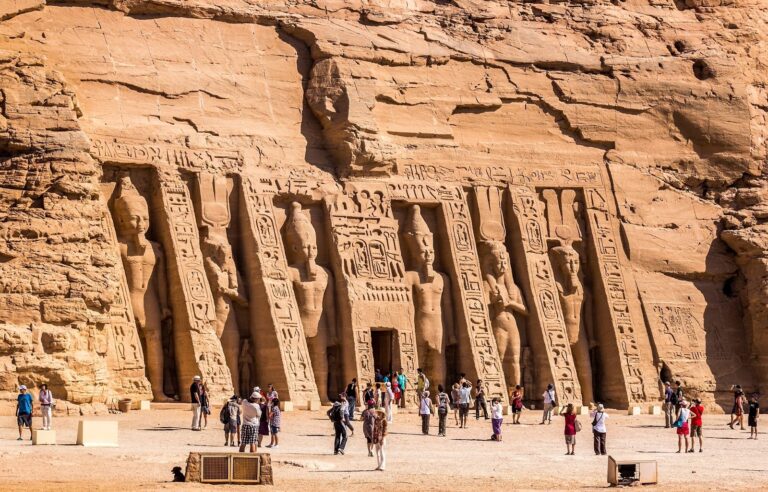
Luxor is a different pace entirely. People call it the world’s largest open-air museum, and honestly, that’s not marketing spin, nowhere else packs this many temples and royal tombs into such a small stretch of riverbank. Karnak Temple, the Valley of the Kings, the Temple of Hatshepsut, it’s a lot, but it doesn’t come at you all at once the way Cairo does.
What you’ll actually see and do in Luxor:
- Karnak Temple Complex, the largest religious building ever constructed
- Luxor Temple, especially striking when lit up at night
- The Valley of the Kings, where Tutankhamun’s tomb and dozens of other royal tombs were found
- The Temple of Hatshepsut, Egypt’s most famous female pharaoh
- The Colossi of Memnon
- A hot air balloon ride at sunrise over the West Bank, genuinely one of the best views in the country
- The starting or ending point for most Nile cruises toward Aswan
We’d point you toward Luxor first if:
- You care more about ancient Egypt than modern Egypt
- You’d rather ease into your trip than get thrown into a big city
- You’re starting a Nile cruise south toward Aswan
- You want fewer crowds than what you’ll find around Giza
- You’re a photographer chasing golden-hour temple shots without a mob of people in frame
Luxor’s trade-offs: fewer restaurant and hotel options compared to Cairo, and the West Bank sites in particular can get very hot outside of winter, since there’s little shade around most tombs and temples.
Side-by-Side Comparison
| Cairo | Luxor | |
| Main draw | Pyramids of Giza, Grand Egyptian Museum | Karnak Temple, Valley of the Kings |
| Historical era | Old Kingdom (Pyramids) + modern city | New Kingdom (Thebes) |
| Pace | Fast, urban, high-energy | Slow, historical, reflective |
| Ideal stay | 2–3 days minimum | 2–3 days minimum |
| Getting there | Major international airport (CAI) | Domestic flight (~1 hr) or overnight train from Cairo |
| Crowds | Heavy, especially at Giza midday | Moderate, heaviest at Valley of the Kings in winter |
| Heat | Hot but bearable most of the year | Noticeably hotter, especially May–September |
| Best for | First-timers wanting icons, city life | History lovers, Nile cruise starters, photographers |
| Nightlife & dining | Extensive | Limited but improving |
Getting Between the Two Cities
Most travelers fly. It’s roughly a one-hour flight between Cairo and Luxor, with several daily departures on EgyptAir, Air Cairo, and Nile Air, and one-way fares that can range anywhere from around $50 to $150 depending on how far ahead you book. If you’d rather skip the airport altogether, there’s also an overnight sleeper train between the two cities, slower, but it saves you a hotel night and gets you into Luxor first thing in the morning.
How Much Does Each City Cost?
Cairo tends to run slightly more expensive on accommodation and dining simply because it’s a bigger, more international city with more five-star options and higher demand. Luxor, by contrast, often works out a bit cheaper for hotels, but entrance fees to its temples and tombs (especially with add-ons like the Valley of the Kings’ extra tombs, or Tutankhamun’s tomb specifically) can add up faster than people expect. If you’re booking a Nile cruise as part of your Luxor stay, most meals and some excursions are usually already bundled into the price.
Weather: When Each City Is at Its Best
Both cities share Egypt’s broader October–April sweet spot, but Luxor swings harder in both directions. Summers in Luxor (June–August) regularly push past 40°C (104°F), while Cairo’s summer heat, though still intense, is a few degrees more manageable thanks to its location closer to the Delta. Winter in both cities is comfortable during the day but can get surprisingly cool at night, so pack a light layer regardless of which city you visit first.
What We’d Actually Recommend
If you ask us directly, most travelers get the best version of this trip by spending 2–3 days in Cairo first, then flying down to Luxor to pick up a Nile cruise toward Aswan. There’s something that just makes sense about seeing the big, loud icons before easing into the slower, more reflective pace of Upper Egypt; it roughly follows the order the country’s own history unfolded in, from the age of the pyramids to the age of the pharaohs’ tombs.
But if your schedule really only allows one, let your own interests make the call rather than ours. If you’re chasing landmarks and city energy, Cairo won’t disappoint. If what pulls you to Egypt is the history itself- tombs, temples, the quiet grandeur of it all start in Luxor.
Common Mistakes to Avoid
- Trying to do Cairo in a single day: Between Giza, the Grand Egyptian Museum, and Islamic Cairo, you’ll be exhausted and rushing. Give it at least two full days.
- Underestimating Luxor’s heat outside of winter: Many West Bank sites have little to no shade; plan visits for early morning.
- Booking domestic flights too late: Cairo–Luxor fares rise sharply closer to departure; booking a month or more ahead can save you significantly.
- Skipping the hot air balloon in Luxor: It sells out fast in peak season (December–February); book it before you land in Egypt, not after.
FAQ
Is Luxor safe to visit?
Yes. Luxor is one of Egypt’s most tourism-focused cities, with a strong police and tourist-security presence around all major sites.
Can I do Cairo and Luxor in one week?
Yes, a common itinerary is 3 days in Cairo, then 4 days in Luxor (often combined with a short Nile cruise toward Aswan).
Is it better to fly or take the train between Cairo and Luxor?
Flying is faster (about an hour) and often similarly priced to a comfortable sleeper cabin on the overnight train. The train is a good option if you want to save a hotel night and don’t mind an early arrival.
Which city has better food?
Cairo, simply because of its size and international influence — you’ll find more variety, from street food to fine dining. Luxor’s food scene is smaller but still has excellent traditional Egyptian restaurants.
Plan Your Cairo & Luxor Trip
At Nile Holiday, our Egypt Tour Packages and City Breaks are built to combine both cities seamlessly, with private guides and comfortable transfers between them. Get in touch and we’ll help you decide the right order, and the right itinerary, for your 2026, 2027 Egypt trip.